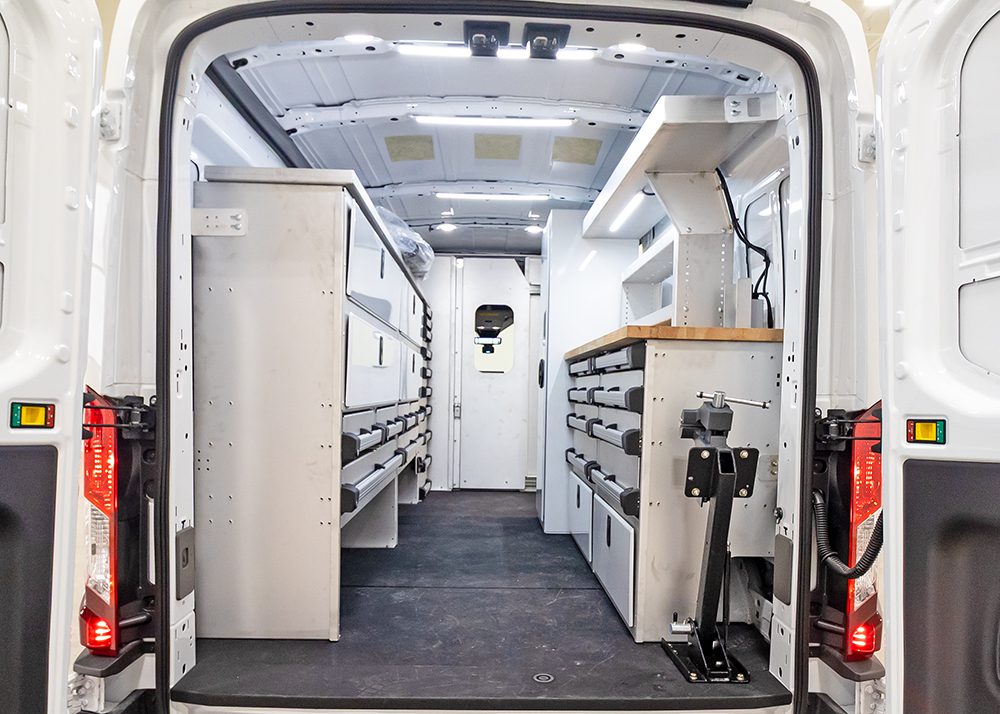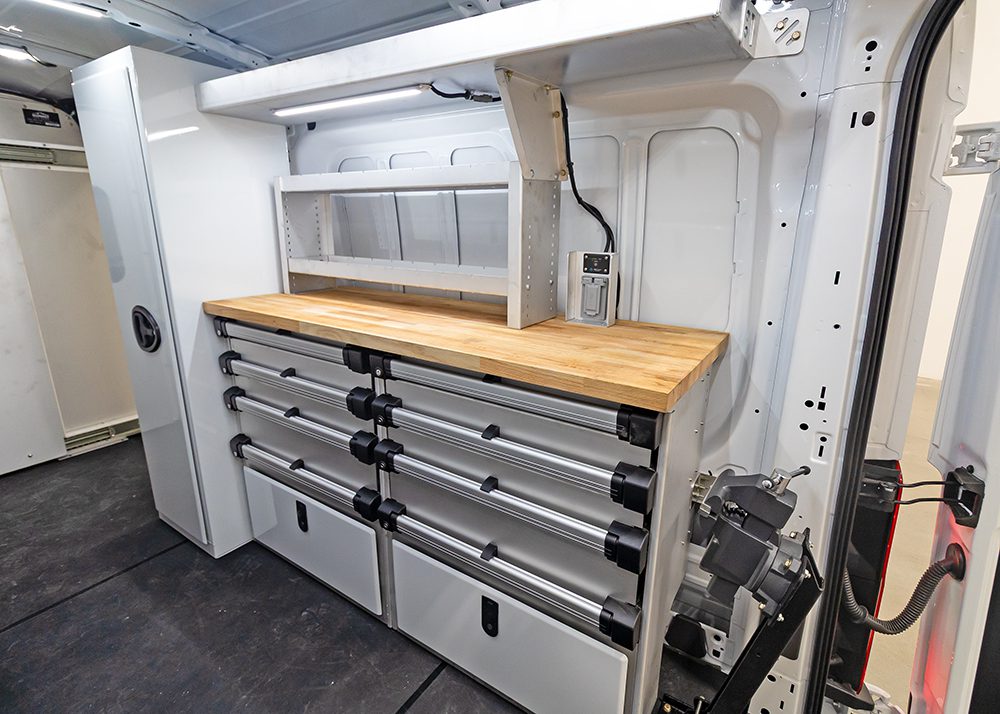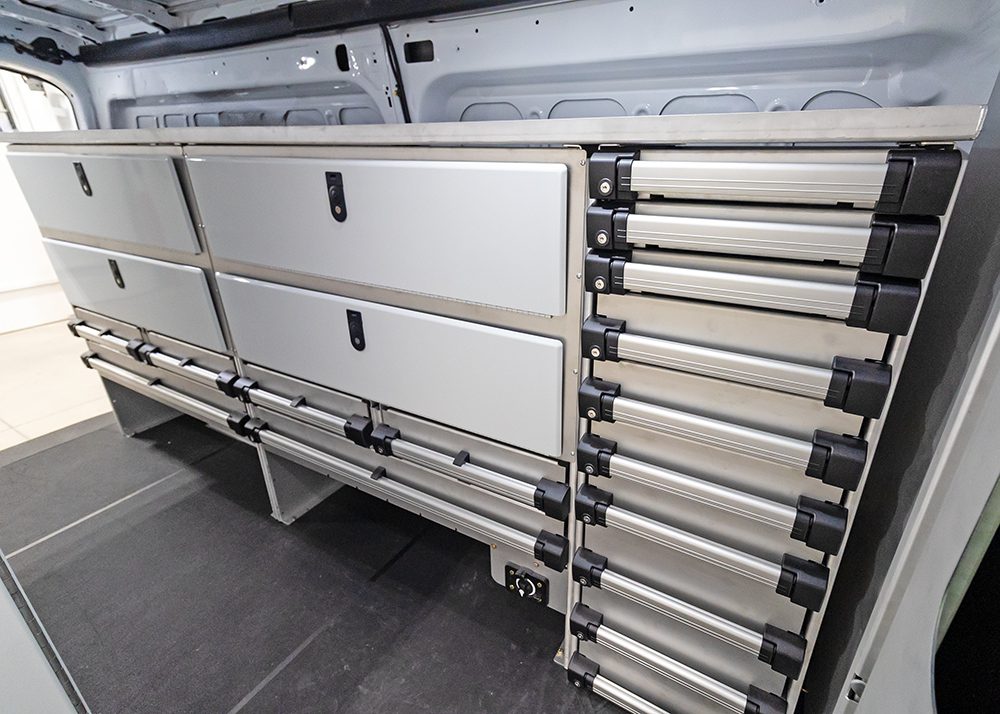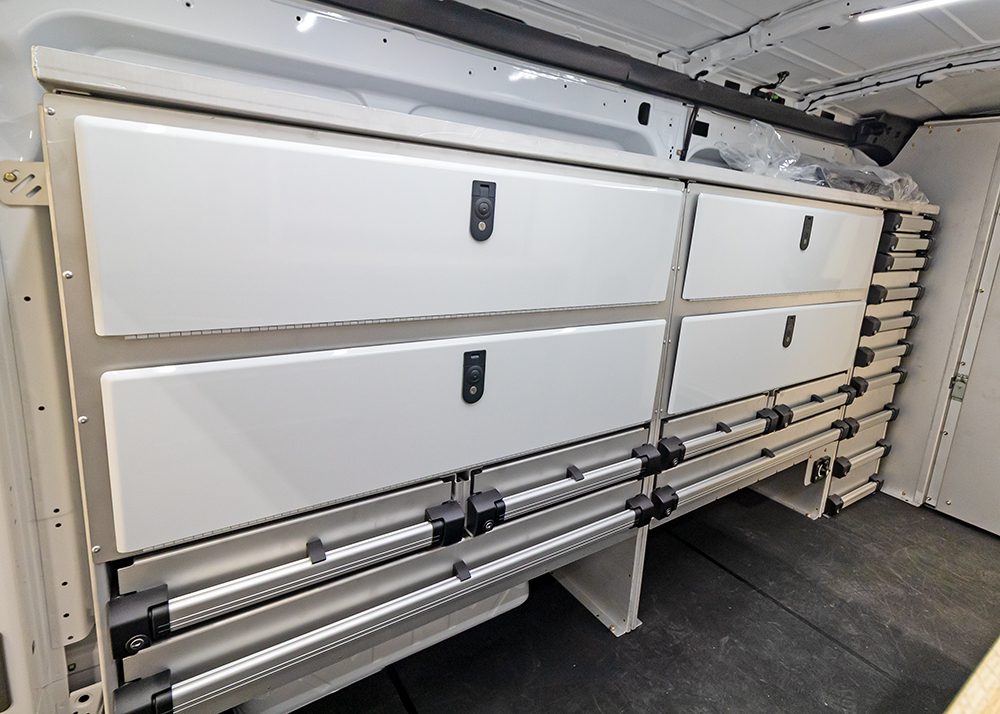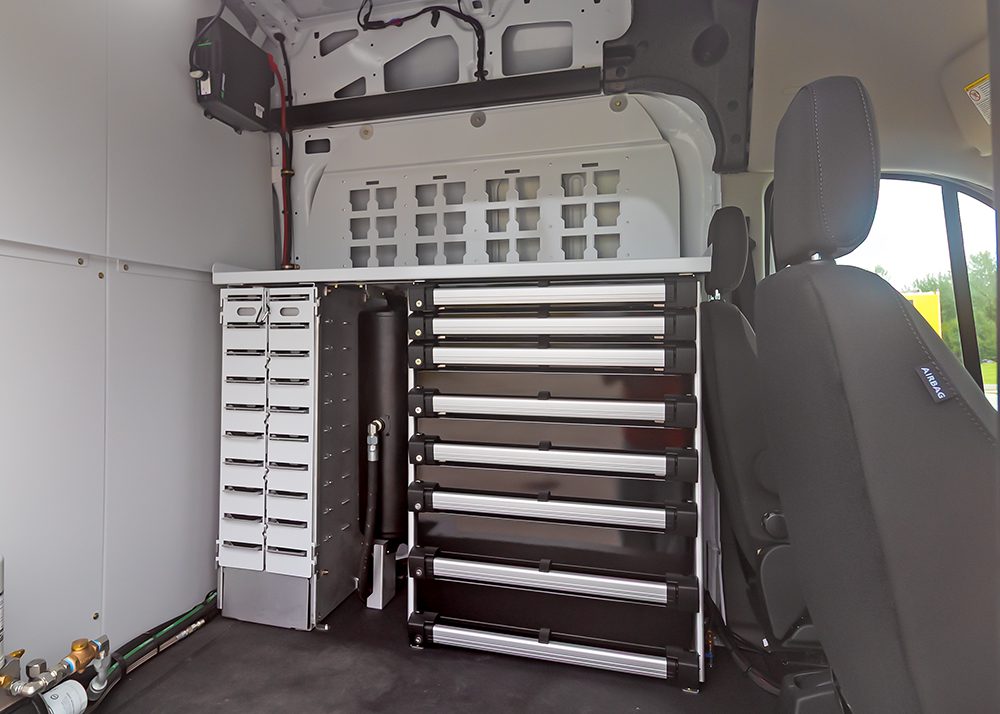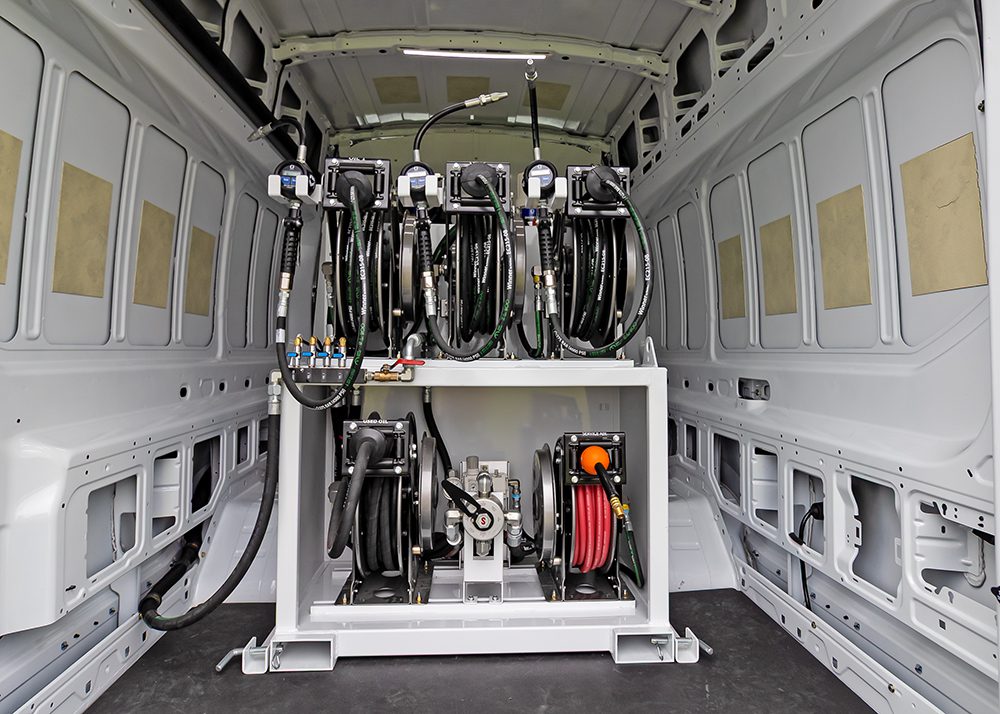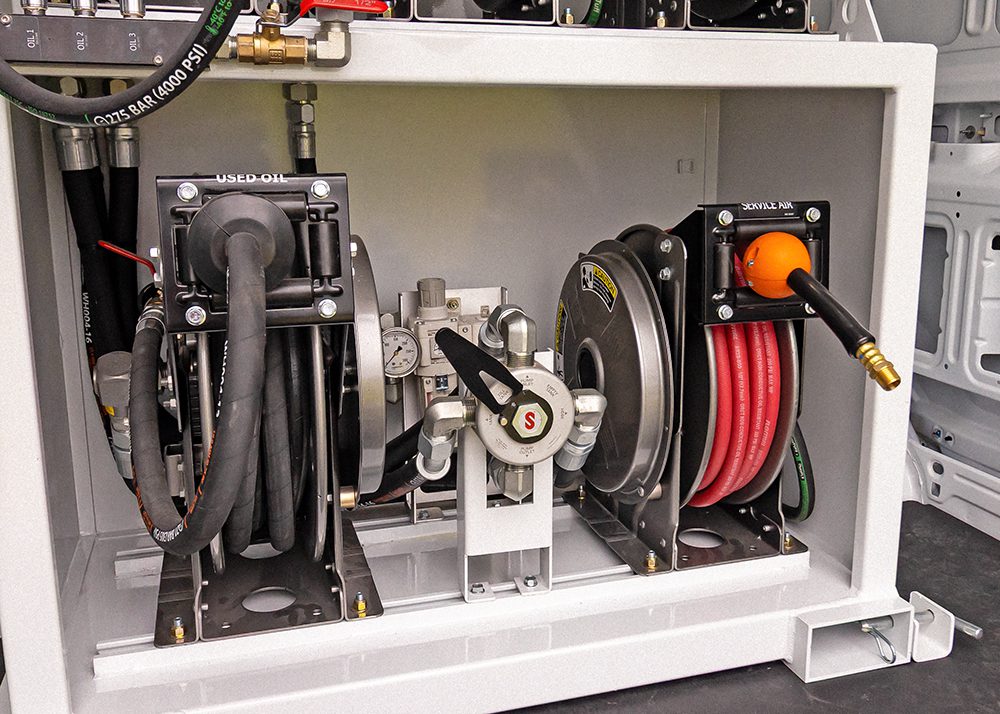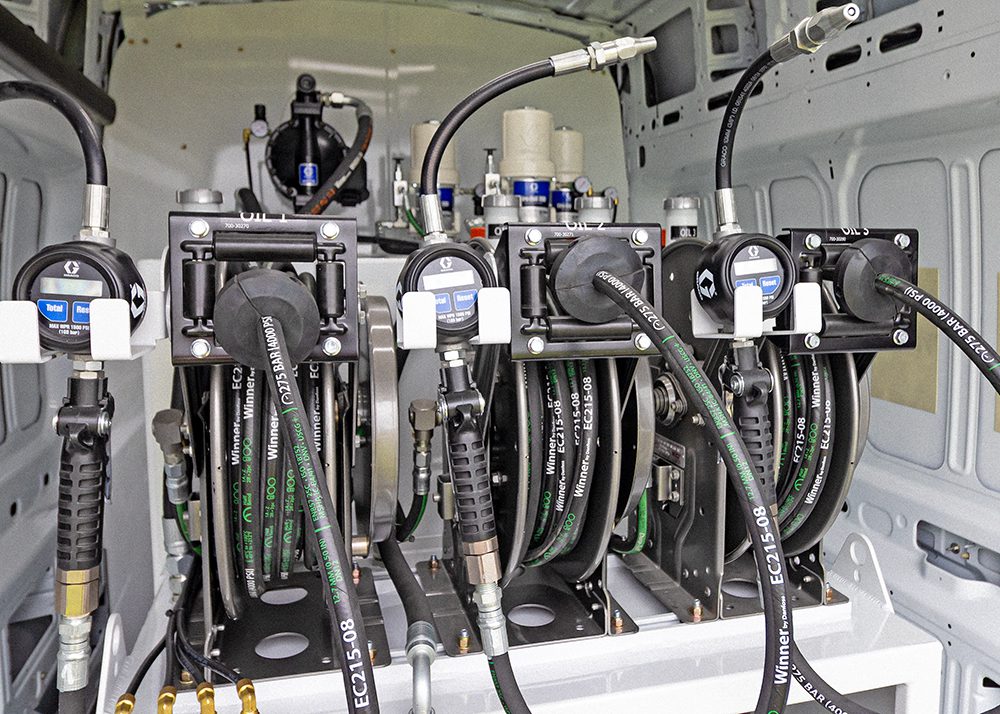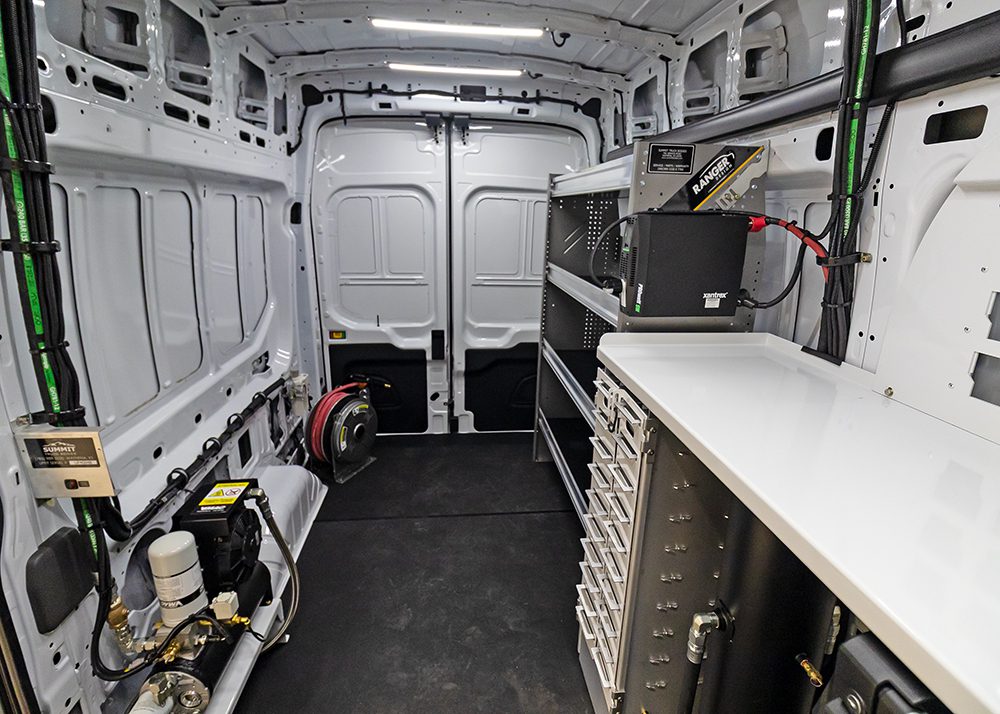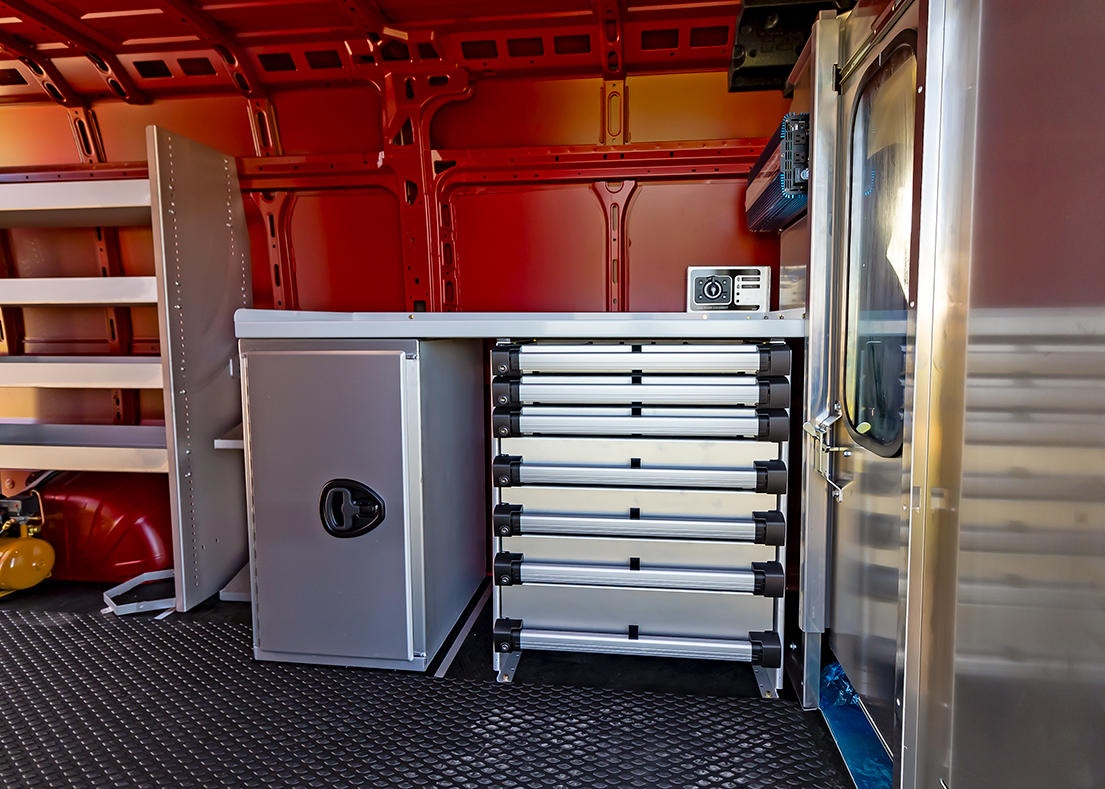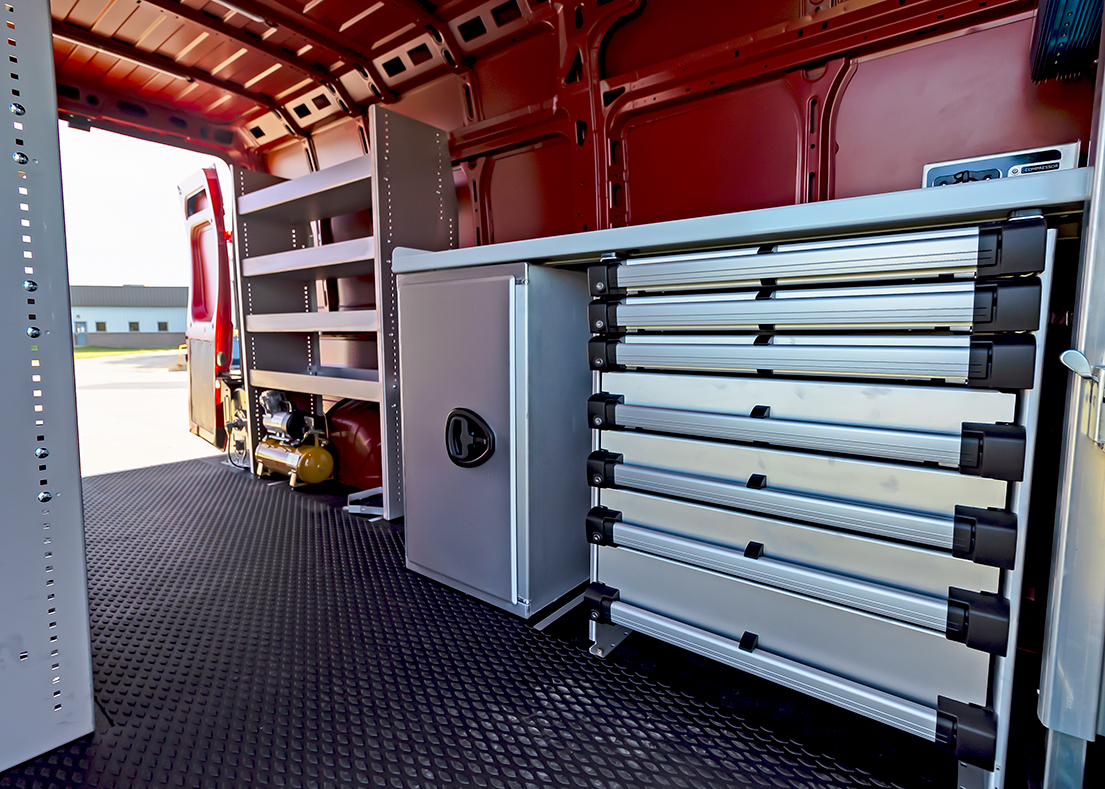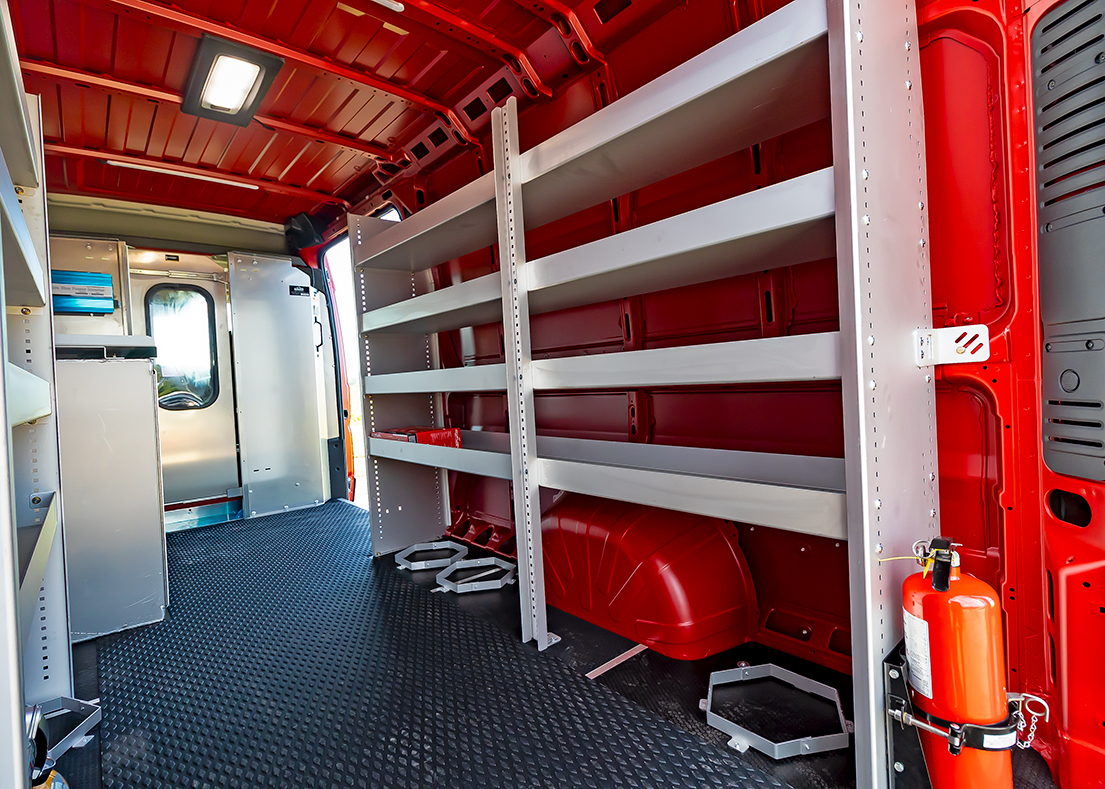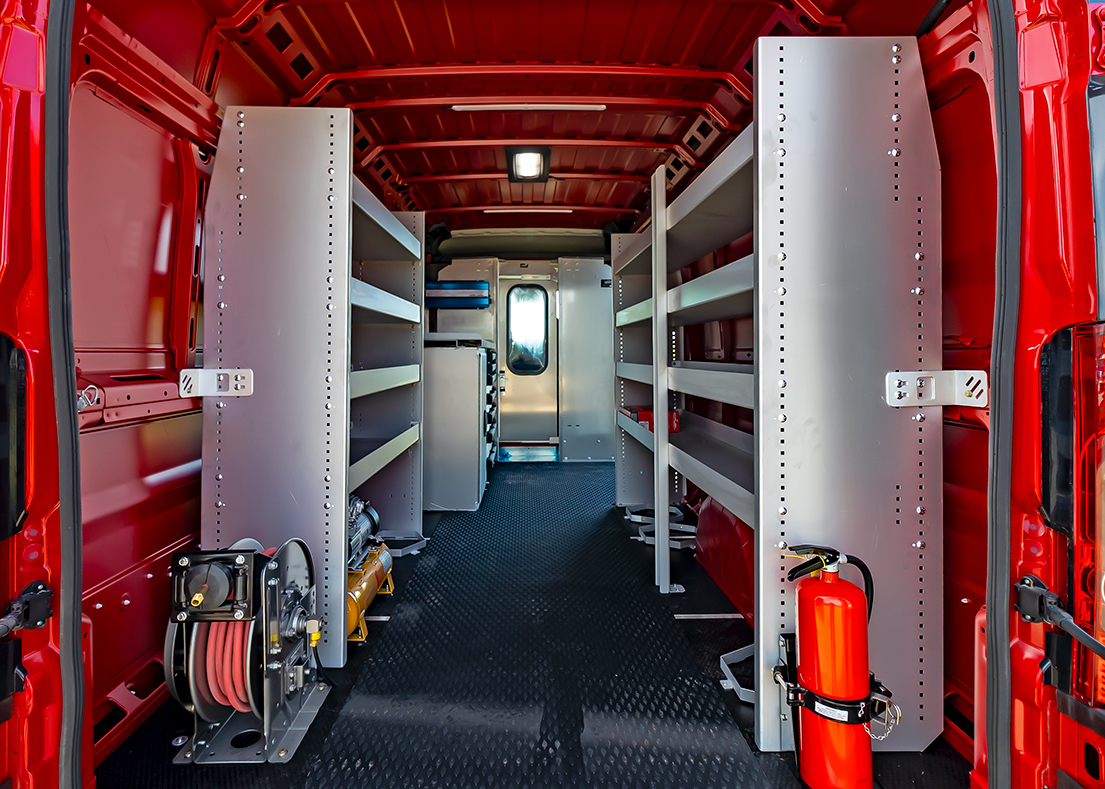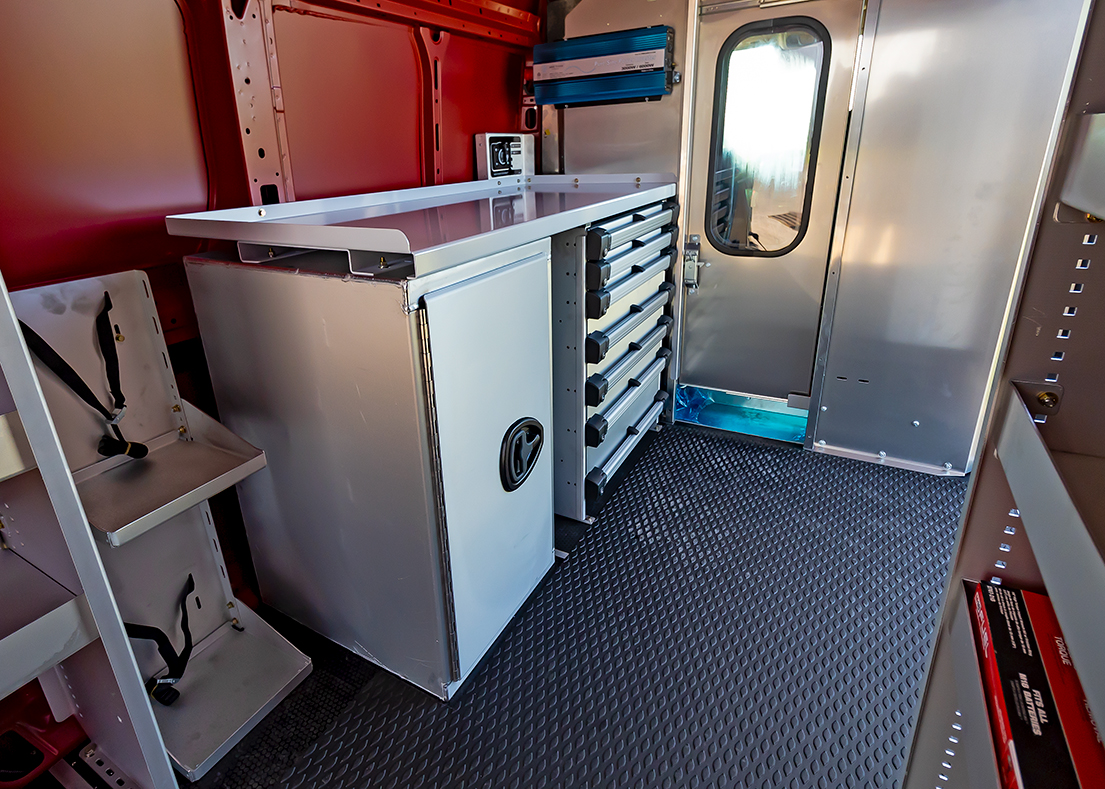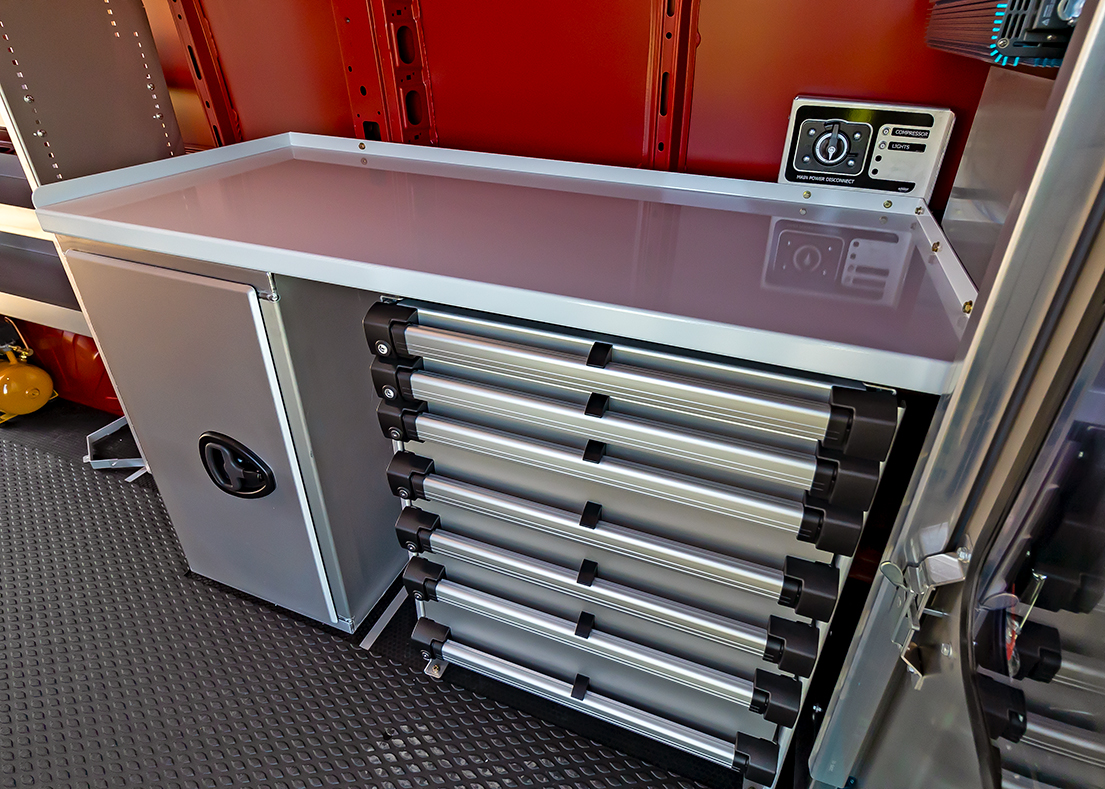

A standard cargo van provides space for tools and equipment. A custom commercial van upfit organizes that space around the work your technicians perform, turning it into a practical mobile workspace.
At Summit Truck Bodies, we configure commercial van upfits around your equipment, storage needs and daily workflow. From organized parts storage to workstations and mobile lube equipment, the right layout helps your team arrive prepared and access what they need at the jobsite.
Here are ten benefits of a custom commercial van upfit for your business.
1. Storage Customized to Your Tools and Parts
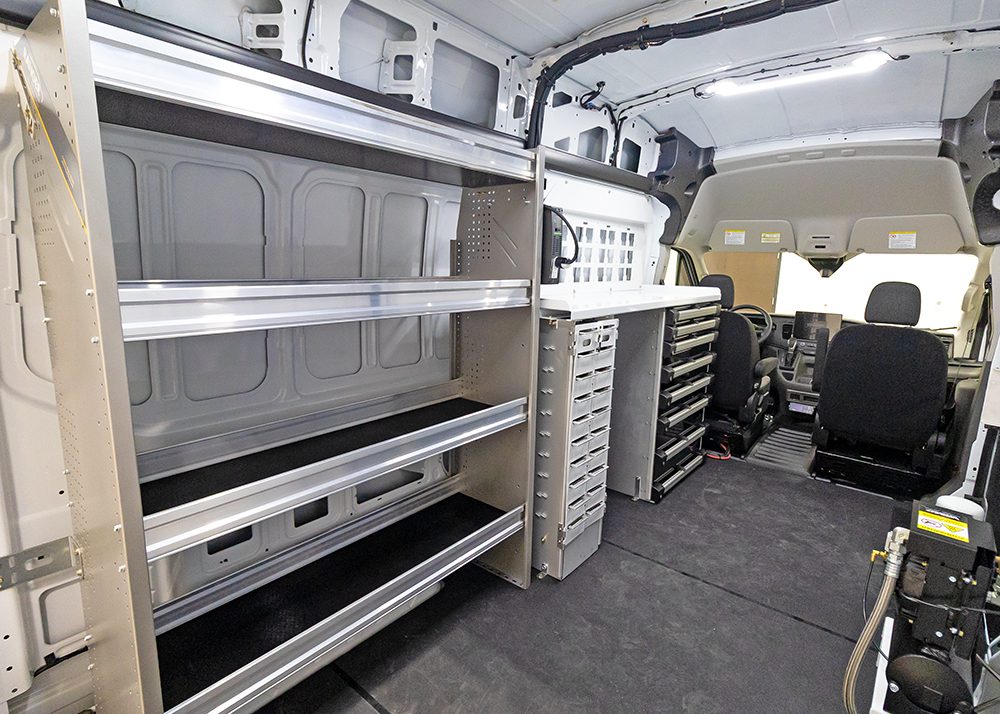
A custom van upfit makes better use of available cargo space by giving tools, parts and supplies designated storage locations. Shelving, drawers and bins can be arranged around the items your technicians carry most often while maintaining usable floor and aisle space.
- Shelving: Organize tools, supplies and larger items in a layout suited to your work.
- Drawer Packs and Dividers: Separate small parts, fittings and tools so technicians can find them more easily.
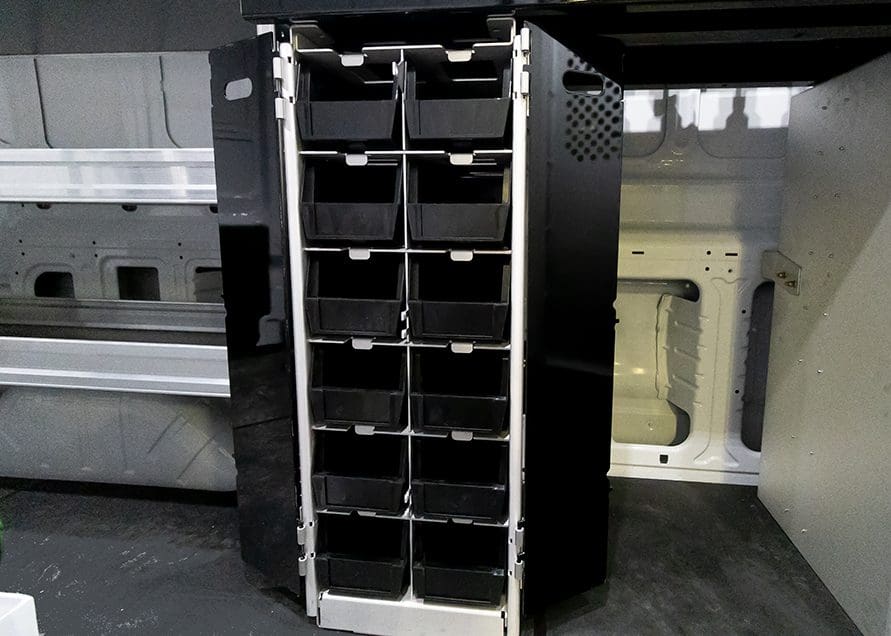
- Bolt Bins: Keep commonly used hardware organized and make inventory easier to check and replenish.
2. A Workspace Built Around Your Equipment
A commercial van can do more than transport and store tools. A custom upfit can incorporate a work surface and equipment that supports repairs, diagnostics or maintenance in the field.
- Workbenches: Provide a designated surface for organizing parts and preparing repairs.
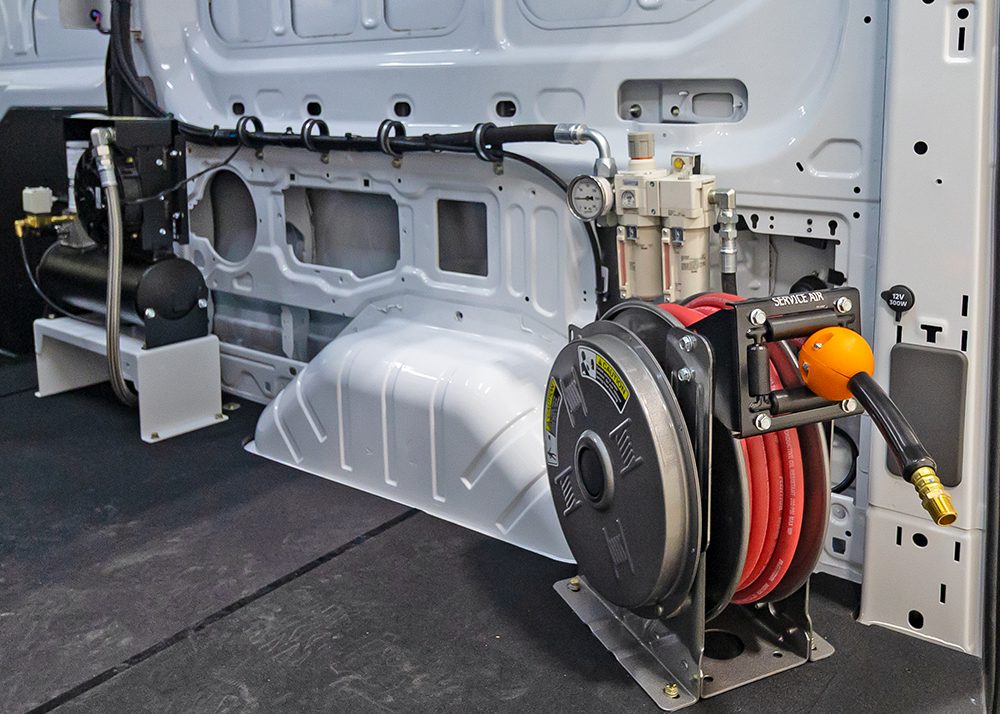
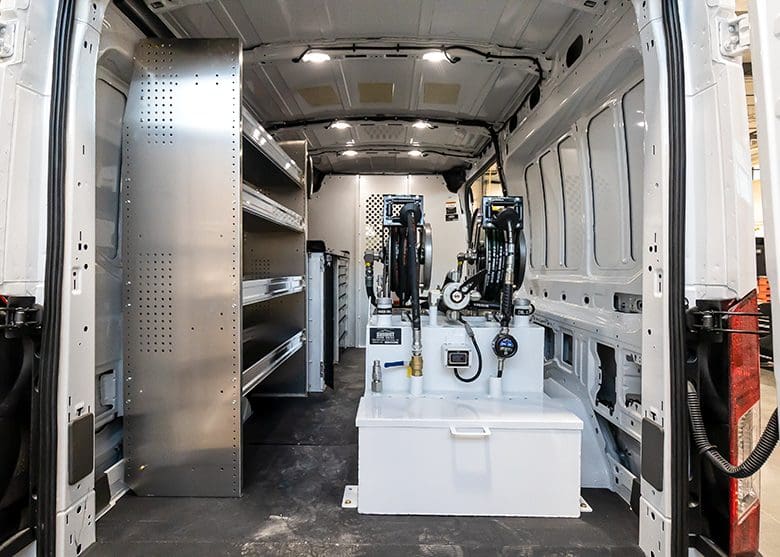
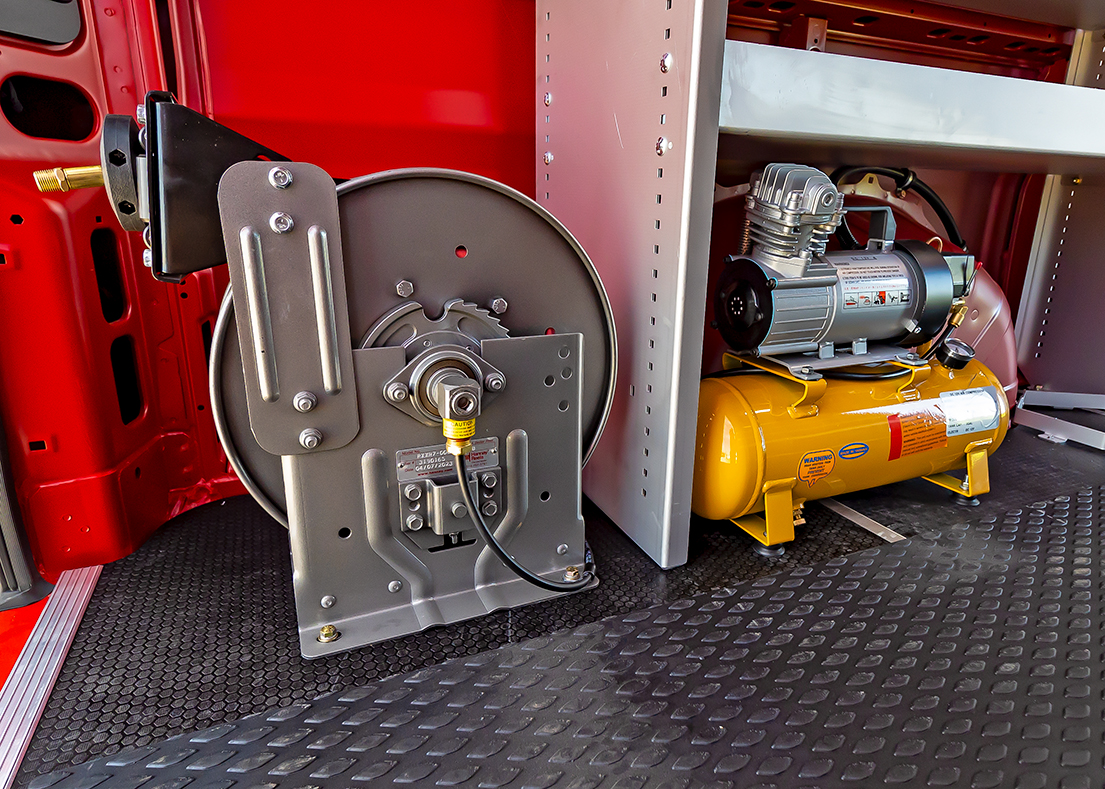
- Equipment Integration: Configure space and mounting for air compressors, power inverters, hose reels or aluminum electric lube skids, depending on the application.
- Lighting and Power: Add task lighting and suitable power options for the equipment technicians use.
The layout should account for equipment weight, ventilation, mounting requirements and enough clearance to work comfortably.
3. More Secure Tool Storage and Cargo Organization
Lockable storage and properly restrained equipment help protect valuable tools and keep the cargo area organized during travel. A custom layout can incorporate security features suited to the equipment your crew carries.
- Lockable Cabinets and Drawers: Provide designated storage for valuable tools and diagnostic equipment.
- Partitions and Bulkheads: Separate the cab from the cargo area as part of a properly designed installation.
- Racks and Restraints: Help keep equipment in place when correctly selected, installed and used.
Secure storage works best when technicians consistently latch drawers, close cabinets, and restrain cargo before driving.
4. Easier Access to Tools and Equipment
A useful van layout considers how technicians load, unload and retrieve equipment throughout the day. Side and rear doors provide different access points, allowing frequently used items to be positioned near the opening that best supports the work.
- Daily-Use Storage: Place commonly used tools and parts within convenient reach.
- Clear Aisles: Maintain space to move through the cargo area and access drawers, shelves and equipment.
- Loading Access: Account for door openings and the dimensions of larger items when planning the layout.
Measure the actual van before finalizing the upfit. Interior height, door clearance and cargo dimensions vary by model and configuration.
5. Vehicle Size Matched to Your Routes
The right commercial van can be a practical choice for service routes with frequent stops, limited parking or tight jobsite access. Its suitability depends on the vehicle’s length, height and turning radius, along with the conditions your technicians encounter.
- Parking and Positioning: Consider the space available at customer sites and service locations.
- Overhead Clearance: Check parking garages, building entrances and other height restrictions.
- Route Requirements: Evaluate paved roads, uneven access areas, and the distances traveled each day.
Compare the van you’re considering with the trucks already in your fleet. A high-roof or extended-length van provides additional space but may introduce parking and clearance limitations.
6. A Vehicle Configured for Different Service Needs
A custom commercial van upfit can help your business dedicate a vehicle to a particular type of work. Maintenance calls, inspections and parts delivery may require different equipment than repairs that need a crane or a larger service truck.
- Routine Maintenance: Carry the tools, parts and supplies needed for scheduled service.
- Specialized Assignments: Configure storage and equipment around a specific technician or service role.
- Fleet Flexibility: Assign vans and service trucks according to the demands of each job.
Start with the services you perform and the equipment they require. That information helps determine whether a van can support the work effectively.
7. An Investment Matched to the Work
A custom upfit allows you to prioritize the storage and equipment your team needs. The goal is to build a capable work vehicle with a configuration that fits your operation and budget.
- Equipment Priorities: Separate essential components from options that add little value to your daily work.
- Operating Costs: Compare fuel, maintenance, insurance and other expenses for the vehicles you are considering.
- Workflow Improvements: Look for opportunities to reduce time spent searching for tools, loading equipment or returning for missing parts.
Evaluate the complete vehicle and upfit cost alongside its expected use. Savings depend on the chassis, installed equipment, routes and work habits.
8. More Options for Future Reassignment or Resale
Your service needs may change during the life of the vehicle. A practical storage layout can make a van easier to reassign to another technician, adapt to a different role or prepare for eventual resale.
- Useful Storage: Choose a layout that supports current work and consider how it might serve another assignment.
- Maintenance Records: Keep documentation for the vehicle and installed equipment.
- Component Condition: Maintain drawers, shelving, locks and other equipment throughout their service life.
Resale value depends on mileage, condition, market demand and the usefulness of the upfit. Build for the work you need to perform today while considering how the vehicle may be used later.
9. Consistent Branding at Customer Sites
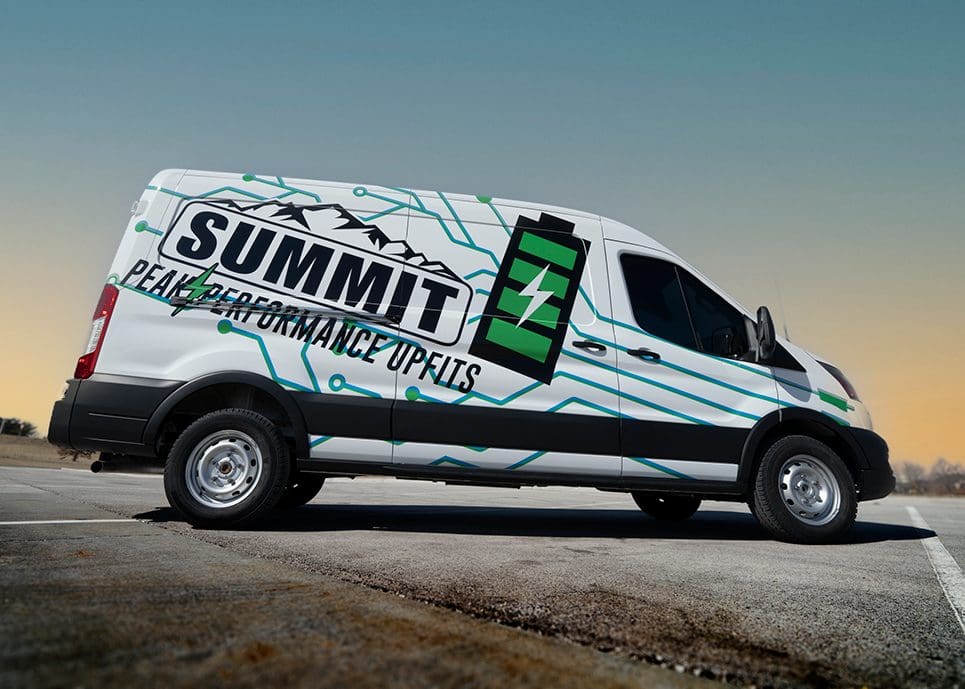
A commercial van gives your business a visible presence wherever your team works. Custom graphics can identify the company, communicate its services and create a consistent appearance across the fleet.
- Company Identification: Make your business name and logo easy to recognize.
- Service Information: Clearly communicate what your business does.
- Contact Details: Use a readable phone number or website address so potential customers can find you.
Keep the design clear and uncluttered. Graphics should remain legible when the vehicle is parked at a jobsite or viewed from a reasonable distance.
10. Consistent Layouts Across Your Fleet
For businesses operating multiple vans, a shared upfit layout can help technicians find tools and supplies in familiar locations. Standardizing key components also gives fleet managers a consistent starting point when adding or replacing vehicles.
- Familiar Storage Locations: Keep commonly used tools and parts in the same places across comparable vehicles.
- Consistent Equipment: Specify drawer packs, bins and other components that support the same service tasks.
- Room for Individual Needs: Adapt portions of the layout for specialized equipment or different technician roles.
Include technicians in the planning process. Their experience can help identify access problems, storage needs and practical improvements before you repeat the layout across the fleet.
How to Choose the Right Commercial Van Upfit
Begin with the work your team performs rather than a list of accessories. A clear understanding of daily tasks helps determine the vehicle size, storage layout and equipment needed.
Before discussing your build, gather:
- Vehicle Details: Make, model, wheelbase, roof height and available payload.
- Equipment Inventory: Tools, parts, fluids and larger equipment, including their dimensions and weights.
- Workflow Priorities: Frequently used items, loading needs and tasks performed inside or beside the van.
- Route Conditions: Typical driving distances, parking restrictions and jobsite access.
- Fleet Plans: Whether the layout will serve one technician or become a standard for multiple vehicles.
Review the proposed layout with the people who will use it. Confirm that equipment fits, storage is accessible, and the completed vehicle can carry its intended load.
Frequently Asked Questions About Commercial Van Upfits
What is a commercial van upfit?
A commercial van upfit adds storage, work surfaces and equipment to a cargo van for a specific business application. It may include shelving, drawer packs, bolt bins, partitions, lighting, power equipment or mobile lube systems.
Is an upfitted van better than a service truck?
The better choice depends on the job. A van can suit work that benefits from enclosed storage and an interior workspace. A service truck may be more appropriate when technicians need a crane, exterior compartment access or greater payload capacity. Some fleets use both for different assignments.
How does an upfit affect available payload?
Installed shelving, drawers, workbenches and equipment add weight to the vehicle. The completed configuration must also account for technicians, tools, parts, fluids and other cargo. Review the chosen chassis and its ratings with the upfit team before finalizing the build.
Can a van upfit include mobile lube equipment?
A van can include mobile lube equipment when the vehicle and application support it. Available payload, fluid capacity, mounting, ventilation and equipment access all affect the design. Summit offers lube systems as a commercial van upfit option.
Build a Commercial Van Around Your Work
A well-planned commercial van upfit gives technicians organized storage, convenient equipment access and a workspace suited to their daily responsibilities.
At Summit Truck Equipment, we configure commercial van upfits around your equipment, workflow and application. Share your vehicle details, storage priorities and service requirements with our sales team to begin planning your build.
Explore Summit’s commercial van upfit options or contact your territory sales representative to discuss your application.
This post was originally posted in July of 2023 and updated in October 2026.